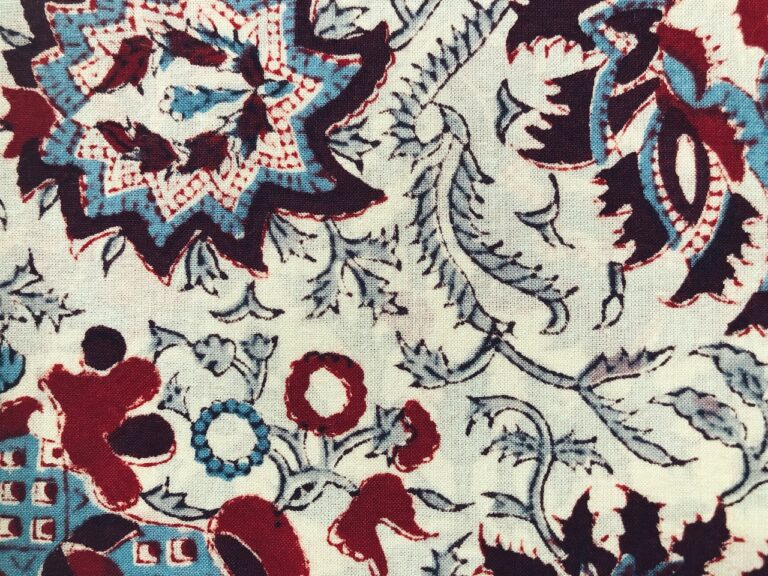
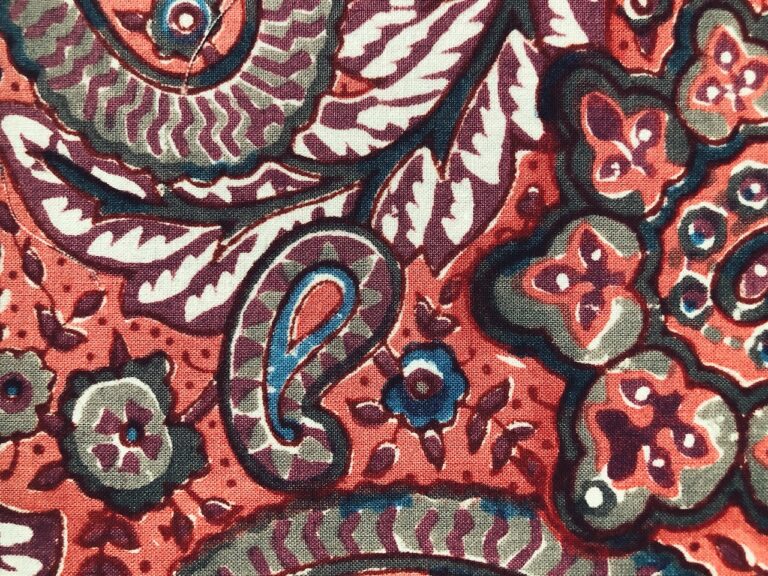
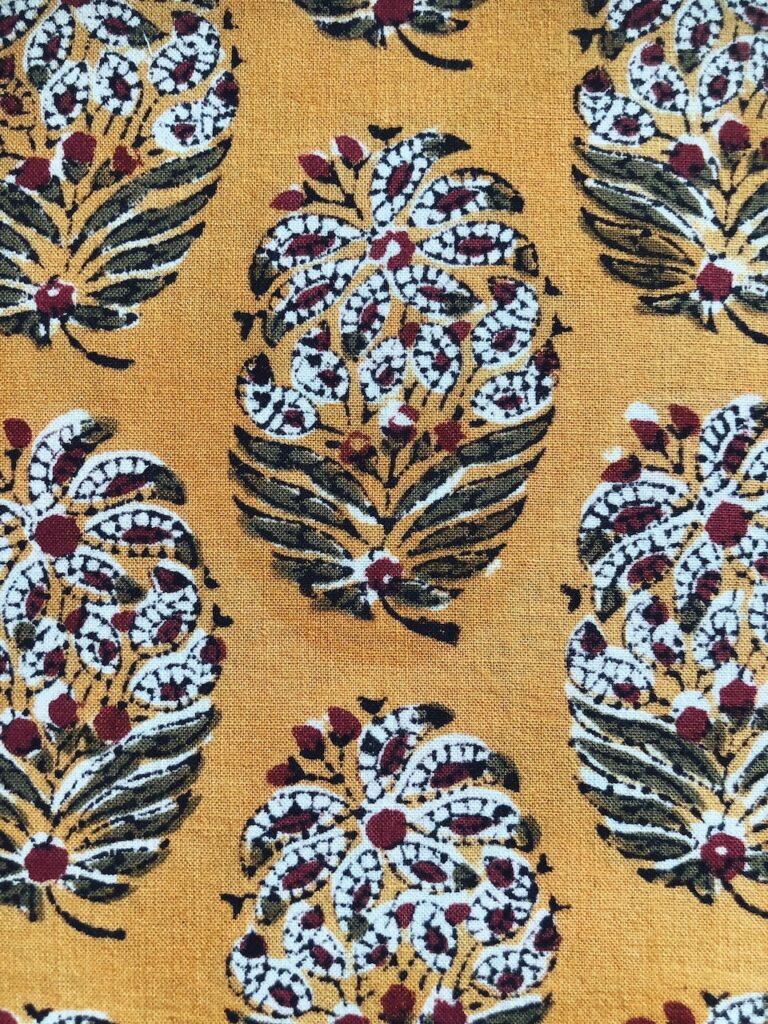
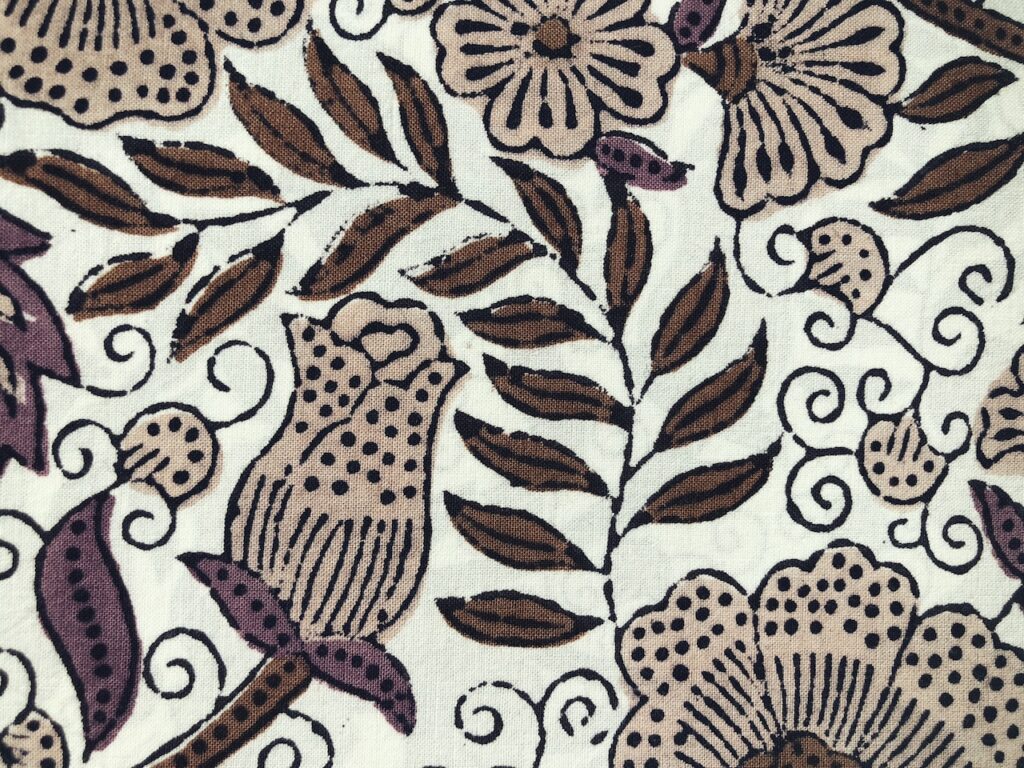
Anthropology of Cloth — The story of Indian block printing

Field Notes · Anthropology of Cloth

Long before fashion seasons, trend forecasts, and “new arrivals,” cloth carried meaning. It spoke of place, belief, protection and belonging.

In India, this language was printed by hand. Block by block. A piece of cotton could travel further than its maker ever would, across deserts, oceans, and empires.

This is not the story of decoration. It is the story of how cloth became culture.

Before Dates: Fragments and trade routes (c. 2000 BCE – 3rd century CE)

To understand this craft, we have to go far back in time.

The earliest traces of Indian printed textiles appear only as fragments. Mordant-dyed cloth discovered at Mohenjo-Daro, in present-day Pakistan, dates back nearly 4,000 years. Rajasthani prints from the 3rd century CE were found in the Roman trading town of Palmyra, in Syria. Later, 14th-century printed fabrics surfaced during excavations in Fostat, Old Cairo.

These remnants suggest that printed cloth was already traveling vast distances long before modern borders existed. Indian textiles were part of an ancient, interconnected world of trade linking South Asia with the Middle East, Africa and the Mediterranean.

Centuries of patronage and local craft (up to the 16th century)

For centuries, in India, hand-block printing existed within relatively stable social and economic systems, shaped by local patronage, community networks and ritual life. Royal patrons supported artisan communities, while ordinary people bought printed cloth from local chippas for festivals, rituals and everyday life. Cloth moved easily between the court and the street, embedded in both ceremony and daily use.

England was emerging as a global maritime power. The British East India Company (EIC) was established to compete with Dutch, Portuguese, and French traders for trade in India and Asia. European elites increasingly desired exotic luxury goods, including Indian textiles.

Block-printed textiles entered global markets at scale, increasing production and visibility, while European taste began to shape demand.

1600 – The world discovers Indian textiles

Mid-19th Century –
The Industrial Storm

The Industrial Revolution brought mechanised textile production in Britain and other European countries. Power looms and roller printing machines made cloth cheaper and faster to produce. Mass-produced fabrics started flooding the European market. Indian handmade textiles became relatively expensive and less competitive internationally. Combined with colonial policies favoring European textiles, this led to the decline of India’s traditional hand-block printing industry.

With the end of British rule, India gained political independence, but the textile industry entered a period of uncertainty. The royal patronage system, already weakened, disappeared entirely. Long-standing mercantile and social networks collapsed, and many artisan communities lost their traditional markets.

For hand-block printing, this was a moment of rupture: survival depended on reinvention.

1947 – Independence and the breaking of old systems

1960s – Hippie movement in Europe and North America

An unexpected revival arrived with the countercultural movements of the 1960s. Western travelers seeking an alternative to industrial life were drawn to Indian crafts. Block-printed textiles regained visibility, and young Indian entrepreneurs refreshed patterns and color palettes for a new audience.

Artisans experimented with techniques and materials and block printing re-entered global consciousness.

Indian textile companies began working with freelance designers. These designers moved beyond historical motifs, drawing inspiration from their surroundings and everyday life.

Traditional techniques merged with contemporary design, creating collections that influenced international fashion and interiors.

Late 1970s – Rise of freelance designers in India

1991 – Borders open, markets expand

India’s economic liberalisation reopened the country to global trade. Textile exports grew rapidly but the revival was uneven. While some workshops scaled production for international markets, others struggled under price pressure and speed.

Hand-block printing survived, but increasingly as a deliberate choice rather than a dominant practice.

In a global market shaped by fast fashion, hand-block printing continues through small studios, artisan communities and designers committed to slower rhythms. Natural dyes, limited production and manual processes persist not because they are efficient but because they carry meaning.

Today, block printing survives not by competing with speed, but by refusing it.

2000s –Today – Survival, choice and responsibility

Hand-block printing did not survive because it was preserved.
It survived because it adapted, often under pressure, often against the logic of speed and scale.

The cloth we encounter today carries the imprint of global trade, industrial disruption, independence and choice. It is a reminder that textiles are never neutral objects but social and economic witnesses.

To choose handmade cloth now is not to look backward but to participate in a slower and more intentional future.

Field notes

Occasional notes on patterns, places, materials and the questions behind them.

Written when something is worth saying.

You can leave at any time. The notes will stay.

error: Content is protected !!
Scroll to Top